
Low Latency Dedicated Server Korea: Fixing the Lag That Kills Games
You have optimized every line of code. Your database queries are efficient. Your client-side assets are compressed. Yet, user complaints about rubber-banding and connection timeouts keep flooding your support tickets. It is the nightmare scenario for any operations lead: you built a Ferrari, but the road beneath it is full of potholes.
For high-performance applications, especially in the gaming and trading sectors, finding a reliable seoul game server provider is critical. The bottleneck often isn’t the hardware; it’s the route the data travels. This is where a truly optimized low latency dedicated server korea strategy becomes the difference between a thriving user base and a dead platform. We are not just talking about renting a computer in Seoul. We are talking about architectural survival using a premium Low Latency Dedicated Server Korea.
The Hidden Lag Reality: Geography vs. Connectivity
There is a dangerous misconception in the hosting industry. Many believe that simply placing a server within the geographical borders of South Korea guarantees speed for Asian users. This is false. While physics dictates that distance matters, network policy dictates the actual speed. Achieving a true Low Latency Dedicated Server Korea experience requires more than just location.
Korea’s domestic internet infrastructure is robust, but its international gateways can be notoriously congested without an optimized bgp network korea configuration. A standard budget server might sit physically in Gangnam, but if its traffic is routed through a congested public exchange in Tokyo or Hong Kong before reaching the user, that physical proximity is wasted. You get the high cost of hosting without the performance benefits of a real Low Latency Dedicated Server Korea.
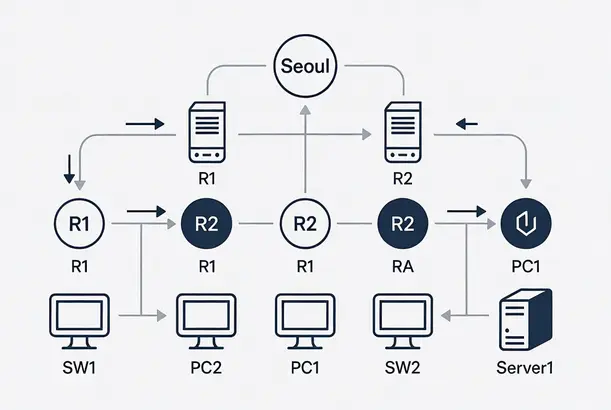
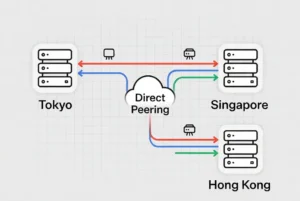
For a game server or real-time application, stability is more valuable than raw bandwidth. A 10Gbps port is useless if 5% of the packets are dropped during peak evening hours. The solution requires a Low Latency Dedicated Server Korea network blend that prioritizes direct peering with major Asian carriers like China Telecom (CN2), PCCW, and NTT, bypassing the clogged public arteries.
Why Distance is Not Speed: The Routing Logic
Imagine sending a package from Seoul to Shanghai. The logical route is a direct flight across the Yellow Sea. However, cheap logistics providers might fly that package to Los Angeles first to save money, then back to Shanghai. This happens digitally every second on budget hosting networks that fail to manage asia pacific dedicated server latency effectively.
Our approach to low latency dedicated server korea infrastructure eliminates these inefficiencies. We utilize intelligent BGP (Border Gateway Protocol) routing. This system acts like a real-time GPS for your data. If the primary link via KT (Korea Telecom) shows a jitter spike of 10ms, the route automatically shifts to LG U+ or SK Telecom backbones instantly. The user never feels the glitch, maintaining the integrity of your Low Latency Dedicated Server Korea service.
Data: Premium BGP vs. Standard Internet
Marketing claims are easy. Network tests are hard. We ran comparative tests from key Asian nodes to our Seoul facility versus a standard localized provider. The goal was to measure not just ping, but stability (jitter), which is the hallmark of a high-quality Low Latency Dedicated Server Korea.
| Origin Node | Public Internet (Avg) | Optimized BGP (Avg) |
|---|---|---|
| Shanghai (Telecom) | 145.2ms | 28.4ms |
| Tokyo (NTT) | 55.8ms | 24.1ms |
| Hong Kong (PCCW) | 68.3ms | 32.7ms |
| Singapore (Singtel) | 92.1ms | 74.5ms |
The reduction in latency is significant, but the reduction in variance is the real victory for technical teams. Consistent latency allows game engines and trading algorithms to predict state accurately, making this the ideal kr dedicated server for esports deployment.
Technical Deep Dive: The Clean Trace
Look at the hop count. A standard route often involves 15+ hops with several timeouts. An optimized Low Latency Dedicated Server Korea path minimizes these handshakes.
Tracing route to KR-Core-Node [Target IP]...

1  10.20.1.1 (Gateway) 0.4ms
2  202.10.3.1 (Backbone) 1.2ms
3  59.43.xx.xx (CN2 GIA Exit) 8.4ms
4  218.xxx.xx.xx (Korea Landing) 26.1ms
5  211.xxx.xx.xx (KR ISP Internal) 27.3ms
6  [Target Server IP] 27.8ms

Trace complete. (6 Hops, Zero Packet Loss)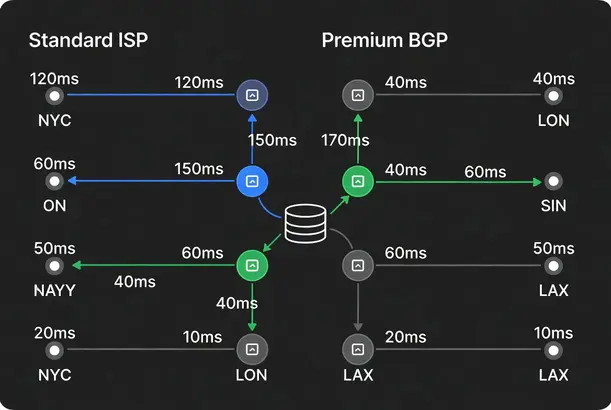
The Bare Metal Advantage
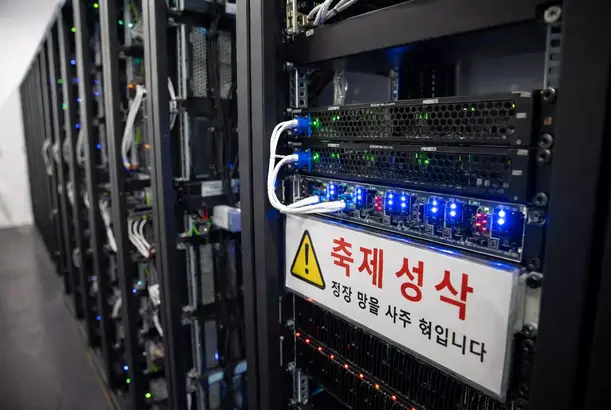
Network is half the equation. The other half is processing power. Virtual Private Servers (VPS) are popular for web hosting, but they suffer from the “noisy neighbor” effect. When you need robust korea bare metal server hosting, shared resources are not an option. If another user on the same physical host runs a heavy database backup, your application stutters.
A true low latency dedicated server korea solution provides isolation. You have 100% of the CPU cycles, RAM, and I/O throughput. This hardware consistency ensures that when the network delivers the data fast, the server processes it immediately. There is no virtualization overhead adding micro-delays to every request on your Low Latency Dedicated Server Korea.
- CPU Priority: No stolen cycles. Your game loop runs uninterrupted.
- I/O Direct Access: faster database reads for player profiles or inventory loads.
- Security Isolation: Physical separation reduces the attack surface compared to shared cloud environments.
Conclusion: Securing the Edge
The Korean digital market is sophisticated and demanding. Users there do not tolerate lag. Whether you are launching an MMORPG, a high-frequency trading bot, or a cross-border e-commerce platform, your infrastructure must be invisible. It should just work. This is why a Low Latency Dedicated Server Korea is an investment in user retention.
Choosing the right Low Latency Dedicated Server Korea provider is not about finding the cheapest rack. It is about investing in a predictable, stable path for your data. Do not let milliseconds cost you market share; opt for a verified Low Latency Dedicated Server Korea.
Eliminate the Lag Today
Stop losing users to poor connectivity. Deploy your high-performance infrastructure in Seoul with premium direct routing and dedicated hardware power. Your players deserve the best Low Latency Dedicated Server Korea experience.
Deploy Your Korea ServerFrequently Asked Questions
Why is low latency crucial for hosting in Korea?
Korea has one of the fastest internal internet speeds in the world. Users expect instant response times. A Low Latency Dedicated Server Korea ensures that your application matches local speeds. If your server introduces lag due to poor routing, users will abandon your service for a faster local competitor.
What is the difference between CN2 and standard China routes?
Standard routes (ChinaNet 163) are often congested and suffer from high packet loss during peak hours. CN2 (China Telecom Next Generation Carrier Network) offers a premium, business-class lane that bypasses this congestion, providing stable connectivity essential for a Low Latency Dedicated Server Korea.
Do you offer DDoS protection with dedicated servers?
Yes. Asian networks are frequent targets for attacks. Our Low Latency Dedicated Server Korea packages come with integrated defense capabilities to filter malicious traffic without increasing latency for legitimate users.
Can I customize the hardware specifications?
Absolutely. Unlike rigid cloud plans, bare metal servers allow you to select specific CPU models, RAM amounts, and storage types (NVMe/SSD) to match the exact requirements of your Low Latency Dedicated Server Korea.
How fast is the setup time for a Korea server?
We stock pre-configured hardware in our Seoul data center. Most standard Low Latency Dedicated Server Korea configurations can be deployed and handed over within 4 to 24 hours, ensuring you can scale quickly when needed.